
A significant step toward humanity’s return to the Moon and upcoming Mars missions has been taken with the launch of the NASA Artemis rocket. After more than 50 years since the Apollo 11 Moon Landing, the National Aeronautics and Space Administration (NASA) is leading the Artemis initiative, which intends to place people on the Moon once more.
The cutting-edge Orion spacecraft, built for deep space exploration, and the potent Space Launch System (SLS) rocket are used in the Artemis missions.
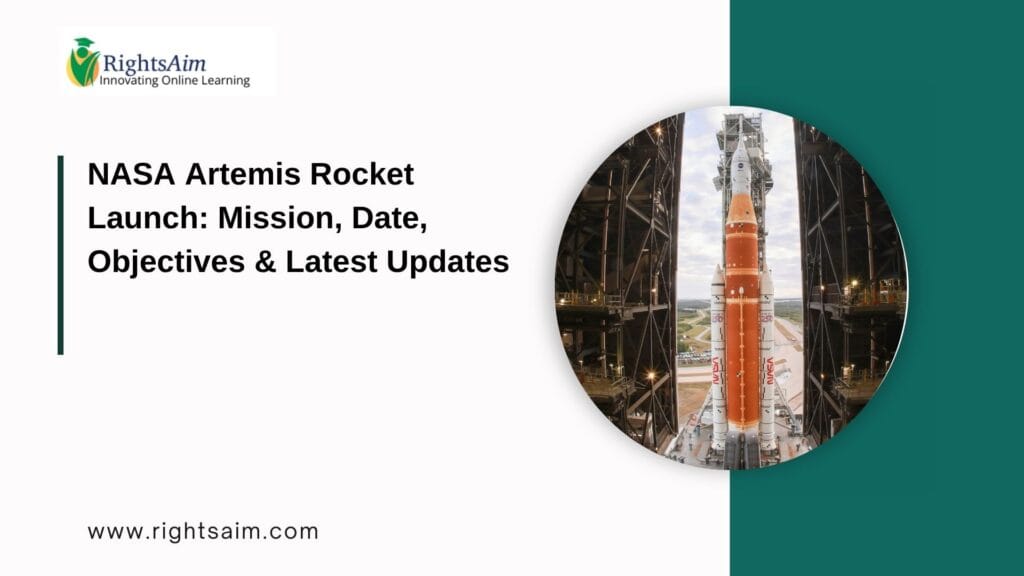
What is the Artemis Program?
The Artemis program is a series of missions by National Aeronautics and Space Administration to:
- 🌕 Return humans to the Moon
- 👩🚀 Land the first woman and first person of color on the lunar surface
- 🚀 Build a sustainable human presence on the Moon
- 🔴 Prepare for future human missions to Mars
👉 It represents the next generation of space exploration.
Artemis Rocket Launch Overview
| Mission | Status | Key Objective |
|---|---|---|
| Artemis I | Completed (2022) | Uncrewed test flight around Moon |
| Artemis II | Upcoming (2026 Expected) | First crewed lunar flyby |
| Artemis III | Planned (2027–28 Expected) | Human Moon landing |
👉 Each mission builds on the success of the previous one.
🚀 Artemis I Launch Highlights
The Artemis I mission was the first test of the SLS rocket:
- 📅 Launch Date: November 16, 2022
- 🚀 Rocket: Space Launch System
- 🛰️ Spacecraft: Orion spacecraft
- 🌕 Mission: Orbit the Moon without crew
👉 The mission successfully demonstrated the capability of NASA’s deep-space systems.
Artemis II (Next Launch)
The Artemis II mission will be the first crewed flight:
- 👨🚀 Astronauts will travel around the Moon
- 🌍 Return safely to Earth
- 🚀 Test life-support systems
👉 This mission is expected to launch in 2026.
Artemis III: Human Moon Landing
The most anticipated mission:
- 🌕 Astronauts will land on the Moon
- 📍 Target: Lunar South Pole
- 🤝 Collaboration with private companies
👉 This mission aims to establish a long-term human presence.
Technologies Behind Artemis Rocket
Space Launch System (SLS)
- Most powerful rocket ever built by NASA
- Designed for deep space missions
- Can carry heavy payloads
Orion Spacecraft
- Advanced crew capsule
- Supports long-duration missions
- Equipped with safety and life-support systems
Why Artemis Mission is Important
- 🌍 Expands human exploration beyond Earth
- 🧪 Enables scientific research on the Moon
- 🚀 Prepares for Mars missions
- 🤝 Encourages global and private partnerships
👉 Artemis is not just a mission—it’s a long-term space exploration strategy.
Artemis vs Apollo Missions
| Feature | Apollo | Artemis |
|---|---|---|
| Era | 1960s–70s | Modern (2020s) |
| Goal | First Moon landing | Sustainable lunar presence |
| Technology | Basic | Advanced AI & systems |
| Duration | Short missions | Long-term missions |
FAQs
What is NASA Artemis rocket launch?
It is part of the Artemis program aimed at returning humans to the Moon.
When is the next Artemis launch?
The next mission, Artemis II, is expected in 2026.
What rocket is used in Artemis?
The Space Launch System (SLS) rocket is used.
What is the goal of Artemis III?
To land astronauts on the Moon and establish a sustainable presence.
Conclusion
The NASA Artemis rocket launch program is a major milestone in space exploration. With missions like Artemis II and Artemis III, humanity is preparing to return to the Moon and eventually travel to Mars.
This new era of exploration, led by National Aeronautics and Space Administration, will shape the future of science, technology, and human discovery.
